
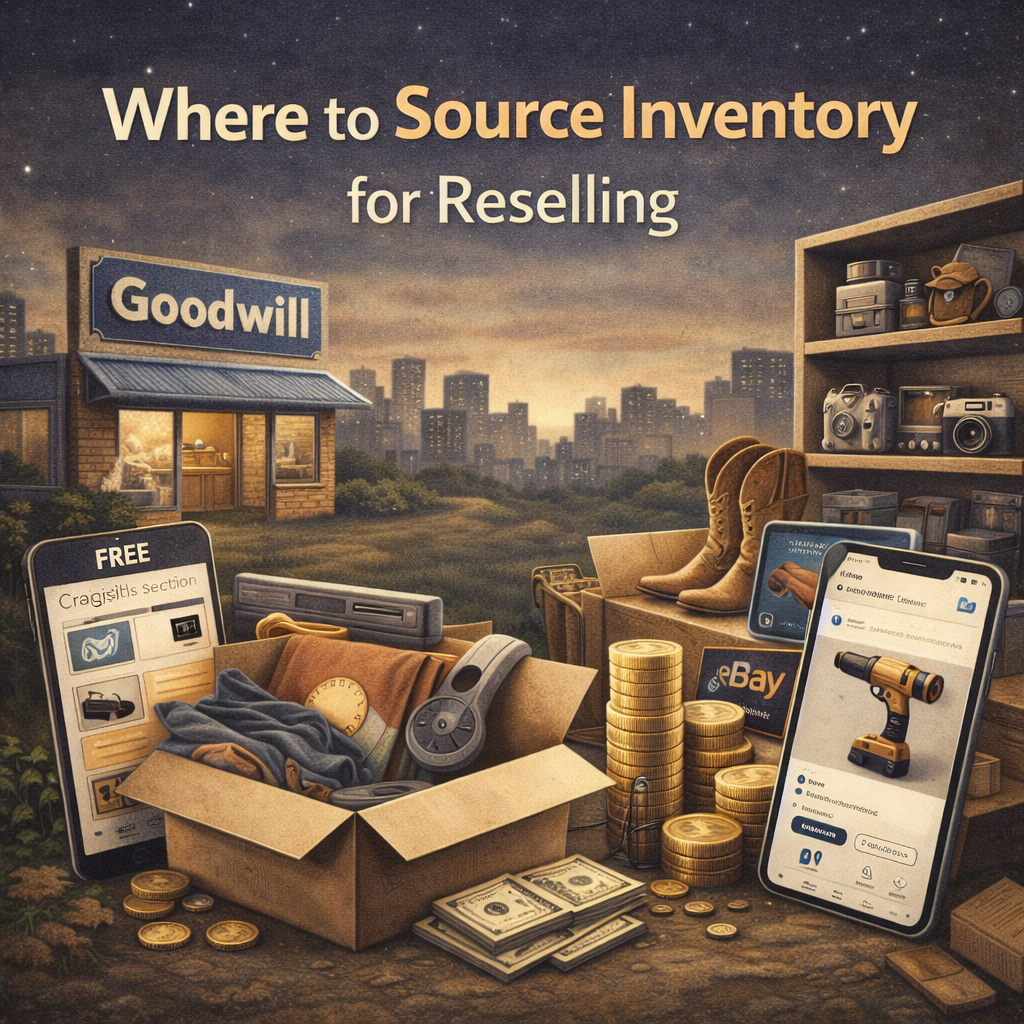
When people ask where the best places are to find items to resell on eBay or Facebook Marketplace, my answer has evolved a lot over time. I’ve sourced inventory from just about everywhere, and some places consistently outperform others depending on your goal. If your objective is fast-moving inventory and steady cash flow, not just chasing the biggest possible ROI, the sourcing strategy matters more than most people realize.
For most resellers, Goodwill and thrift stores are still the best starting point. Yes, Goodwill prices items with resale value in mind. They know the market better than they used to, and truly premium items are often priced higher. But the game isn’t always about squeezing every last dollar out of a flip. Sometimes the smarter move is buying something slightly higher-priced that will sell quickly, instead of chasing maximum profit and sitting on dead inventory for months. Fast sales free up time, space, and mental bandwidth, which is worth more than an extra few dollars in margin.
That also means you shouldn’t automatically dismiss higher-priced items at thrift stores. Even when something seems expensive for a thrift store, they don’t always know exactly what they have. If the comps support it and the item will move quickly, it can still be a good buy. Velocity matters.
If you’re looking for maximum profit potential, free is hard to beat. Craigslist’s free section is one of the most underrated sourcing areas out there. I check it regularly, often during short breaks or downtime. There’s a lot of junk, no question. Pallets, couches, mattresses, things nobody wants to deal with. But mixed in are genuinely valuable items. I’ve found ski boots, tools, and other niche items that cost nothing and flipped for solid profits on eBay. The key is consistency. The free section moves fast, and the good stuff disappears daily.
Ironically, two of the places I like the least for sourcing are Facebook Marketplace and Craigslist, at least when you’re searching for specific items. These platforms are crowded with sellers who understand value. Everyone has a smartphone now. It takes seconds to look up sold comps or ask an AI what something is worth. That means most listings are priced close to market value, leaving very little room for profit. You can still lowball and occasionally win, but it’s far less reliable than it used to be.
When you do see something genuinely underpriced on Facebook Marketplace or Craigslist, you have to move fast and aggressively. Hundreds of other resellers are looking at the same listings with the same mindset. If an item has been sitting for months, that’s usually a red flag. Most experienced resellers would have already bought it if the margin was there.
One of the most profitable sourcing areas, especially when you’re starting out, is your own house. People consistently underestimate how much value is sitting on their shelves, in closets, in storage bins, or in the attic. Once you start listing, it becomes obvious. Vintage clothing, old electronics, media like VHS tapes, bags, accessories, and random collectibles add up quickly. I’m still convinced I have thousands of dollars in sellable items at home that I haven’t even touched yet. And the best part is that this inventory costs you nothing and clears physical and mental space.
Another overlooked sourcing option is local resource or reuse centers. These are essentially Goodwill-style stores focused on home improvement materials. People donate hardware, shelving, brackets, knobs, hinges, pipes, and construction leftovers. Contractors, renovators, and DIY folks shop there to save money. I’ve bought items for pennies that sold online for $15 to $20 or more. These places reward creativity and niche knowledge and often have very little competition from traditional resellers.
The biggest takeaway is to think beyond the obvious and to align your sourcing strategy with your goals. Fast sales versus maximum profit. Time versus margin. Consistency versus occasional home runs. There’s no single perfect source, but there are definitely better ones depending on how you want to run your operation.
If you’ve found interesting or unconventional sourcing spots that work for you, I’d genuinely love to hear about them. If it’s not too secret, drop a comment and share.